
Category: Authority Engine Demand Generation
-
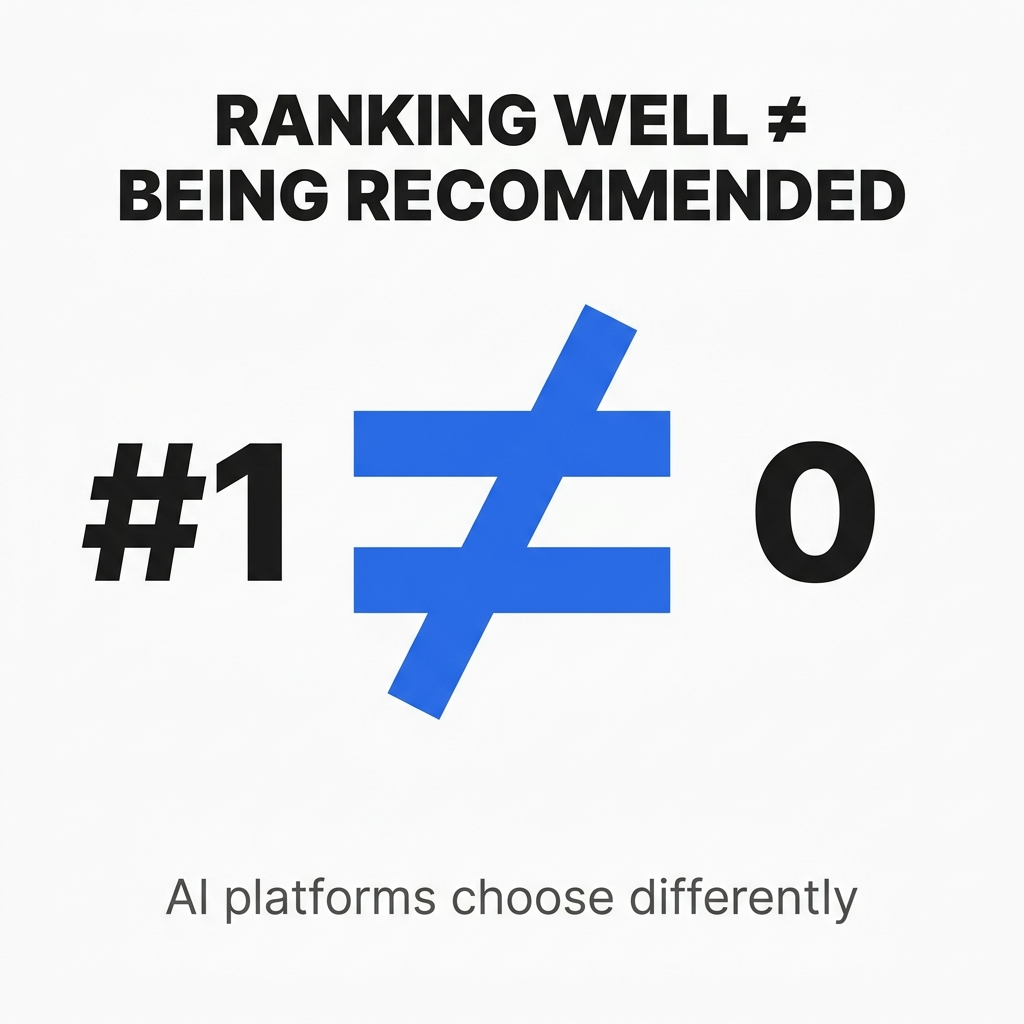
The Marketing Infrastructure Nobody’s Building (And Why 2025 Is Your Window)
•
Most marketing teams are invisible where it matters most.You rank well in Google. Your content library is extensive. Your ads run across multiple platforms.But when a buyer asks ChatGPT or Perplexity…
-
How We Engineer Authority Into a Self-Sustaining Sales Pipeline
•
Many companies struggle with traditional sales approaches, finding success fleeting as pipelines dry up quickly. Authority infrastructure shifts focus from chasing leads to building trust and pre-qualifying buyers through valuable content. By capturing customer language, companies can create meaningful connections that compound over time, leading to smoother sales cycles and…
-
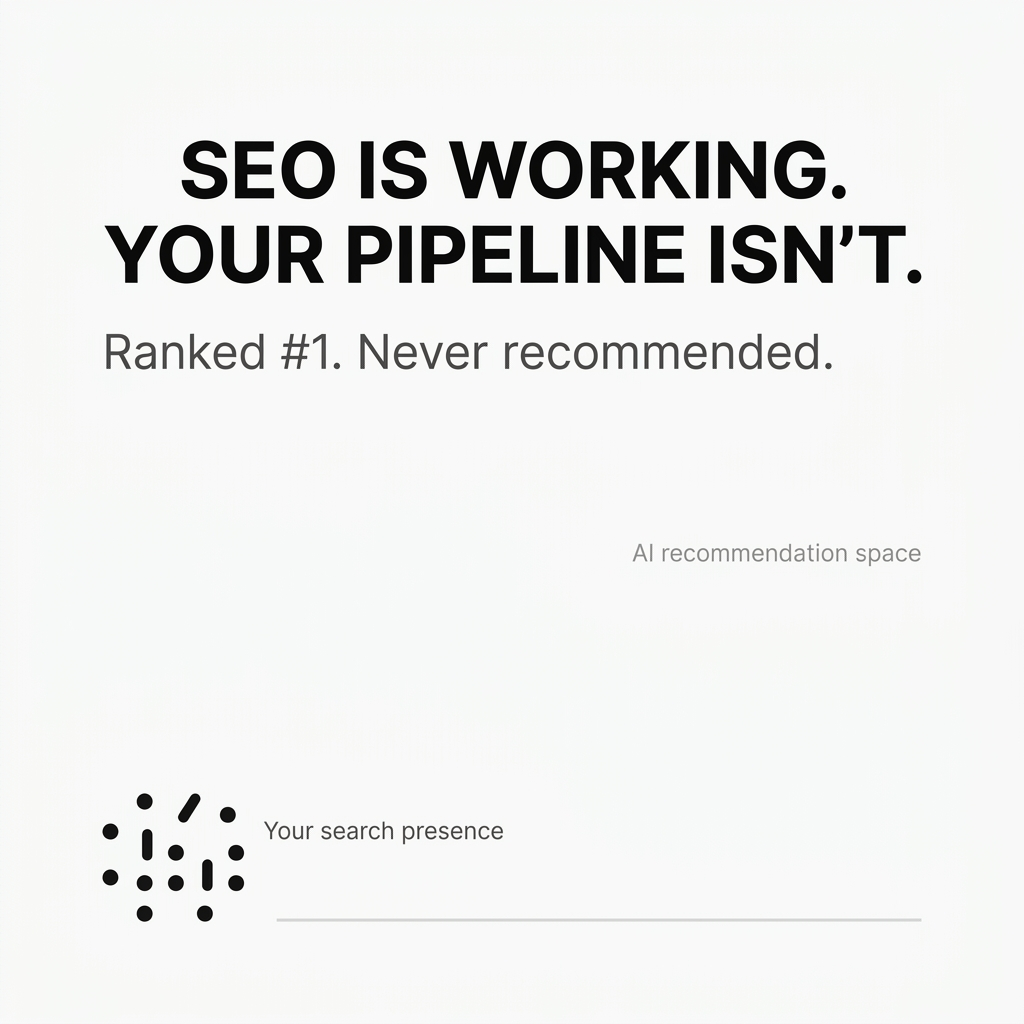
When Your Pipeline Converts But Your Market Share Doesn’t: The Authority Infrastructure Gap
•
Your authority infrastructure is crucial for converting visibility into revenue. Many companies mistakenly believe content alone establishes authority, overlooking how AI systems recommend brands. By emphasizing third-party validation and expert ownership, organizations can improve win rates and pipeline efficiency, driving substantial revenue growth without additional costs. Early adopters will gain…
-

AI Attribution Is Creating Marketing’s Unbridgeable Divide
•
The article discusses the growing divide in marketing effectiveness due to advanced AI and attribution systems. With privacy regulations tightening and third-party cookies disappearing, organizations that invest in structured data and robust conversion tracking gain significant competitive advantages. Companies leveraging AI analytics outperform those relying on traditional methods, leading to…
-

AI Governance Isn’t Slowing You Down, Bad Governance Is
•
AI governance should enhance decision-making speed rather than hinder it. Many companies struggle with ineffective governance frameworks, resulting in stalled AI progress. Effective governance is defined by ownership of decisions and workflows, ensuring accountability. Organizations that integrate operational governance can accelerate AI deployment and inspire confidence, turning ambition into tangible…
-
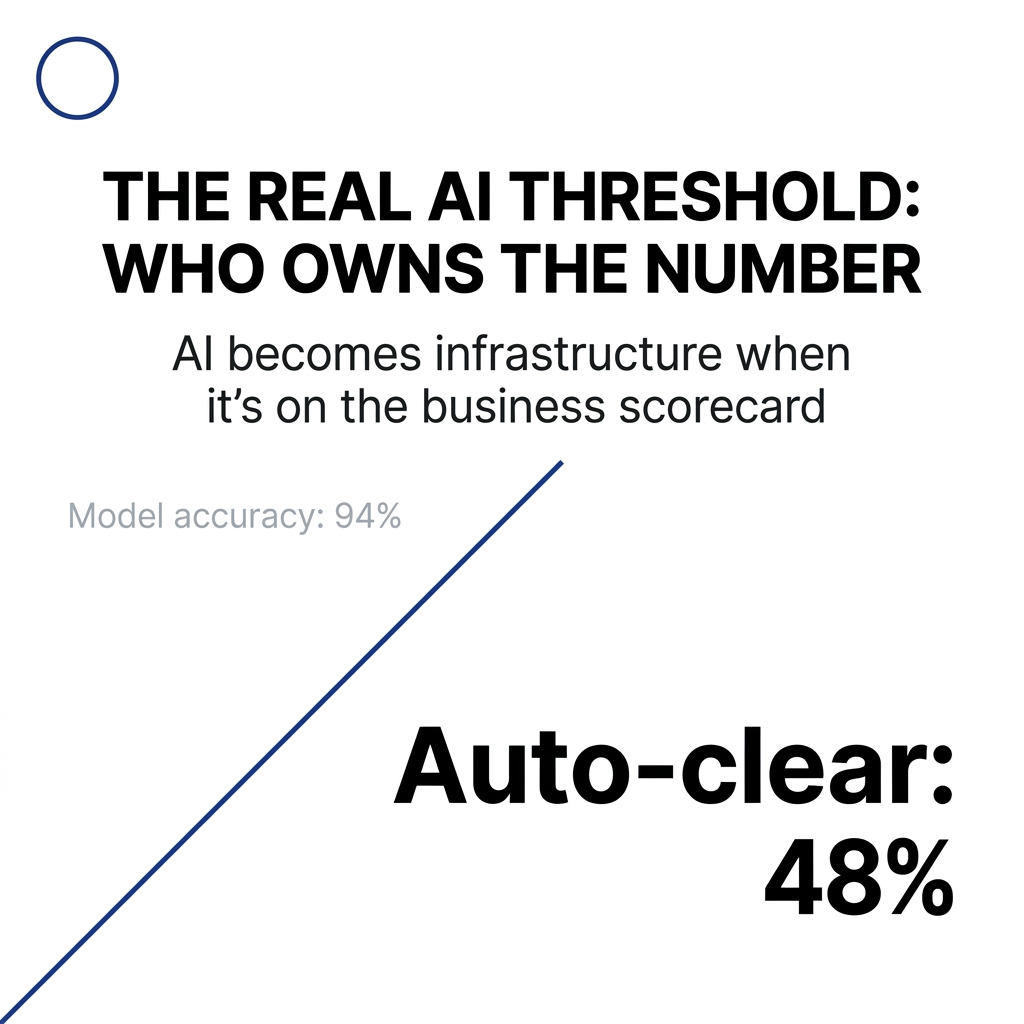
The Moment AI Stops Being a Project and Becomes How You Run
•
The transition of AI from an engineering experiment to essential infrastructure occurs when functional leaders begin owning key performance indicators (KPIs) related to AI. This shift entails redefining success metrics, embedding AI in workflows, and establishing accountability for outcomes, moving from mere technology assessment to integral business decision-making.
-

The Untapped Opportunity in Closing the AI Integration Gap
•
Many companies struggle to integrate AI with legacy systems, leading to high pilot failure rates. The key is to create an overlay layer that enables AI to access and interpret organizational knowledge without replacing existing infrastructure. This approach allows companies to standardize processes and effectively utilize AI in critical workflows,…
-
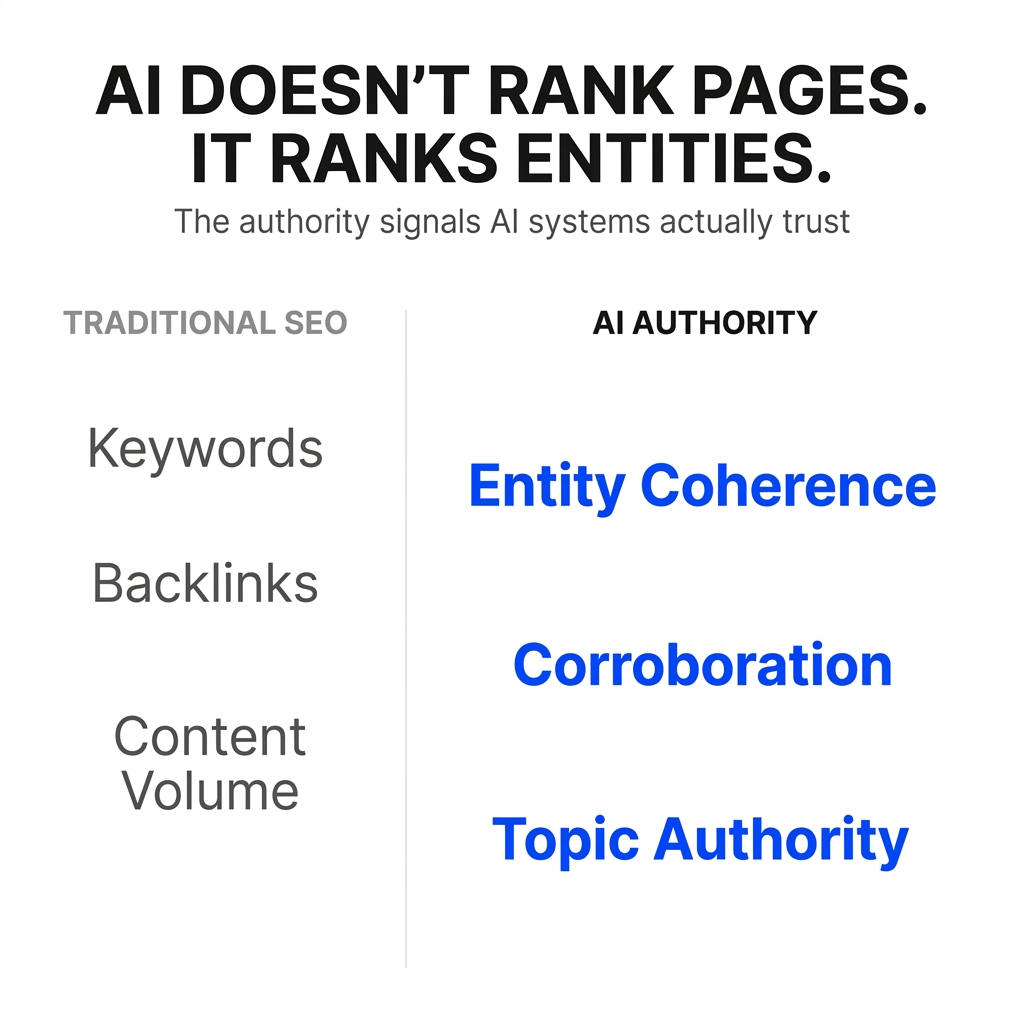
The Authority Signals AI Systems Actually Trust: What the Research Shows
•
B2B organizations are misaligning their optimization efforts, focusing on traditional metrics rather than AI-driven authority signals. Research indicates that AI systems prioritize entity coherence, independent corroboration, and topic-specific credibility over content relevance. As AI search evolves, companies must adapt their strategies to establish trustworthiness, or risk falling behind competitors.
-

The Infrastructure Shift: Why Authority Can No Longer Be a Byproduct
•
The content discusses the challenges businesses face in AI-driven markets, where traditional marketing strategies no longer guarantee visibility. With 37% of searches starting with AI, companies must proactively establish authority in AI systems. This requires a shift from viewing authority as a byproduct of success to treating it as a…
-

Why We Built AI Authority Engineering on Academic Research Instead of Industry Best Practices
•
The AI Authority Engineering Framework, developed from doctoral research, focuses on how AI systems construct trust and authority, moving beyond traditional marketing tactics. As AI evolves rapidly, it emphasizes the importance of rigorous methodology and entity clarity, ensuring brands are recognized as high-confidence nodes within AI systems, driving better outcomes.